Science & Engineering
AI FOR SCIENCE
Scientific exploration
Start with target properties and research questions. Organize experimental and literature information, screen candidates and arrange calculations. Provide candidate rationales, execution records and experimental priorities to inform the next preparation and measurement steps.
AI FOR ENGINEERING
Engineering development & management
Organize engineering models and execution records around components, dimensions and control scenarios. Independent checks locate structural or control discrepancies, followed by automated regression runs after revision. This engineering verification method has been implemented in MOTRA's local engineering validation.
Materials & formulations
Screen formulations worth preparing within composition and processing constraints.
Work backwards from target properties, cost and processing conditions to define the candidate space. Compare existing formulations, calculations and unmeasured properties on a common basis, then choose candidates worth preparing and measuring next.
Materials screening, formulation comparison, property calculations and experiment prioritization
- What we need to start
- Target properties and measurement methods, existing formulations and batch records, cost and processing constraints, and computational tools confirmed as available. Properties without measurement support are explicitly marked as assumptions.
- How software contributes
- Standardize units and sources, exclude infeasible candidates using hard constraints, then compare the remainder with models or computational tools confirmed by both parties. Molecular and formulation research can begin with specified properties, synthesis conditions and a computational environment.
- Software outputs
- Candidate comparisons, computational conditions, recommendation rationales and unmeasured property lists. Assumptions and missing data remain attached to the corresponding candidates.
- Professional judgement and revision
- Researchers select candidates for recalculation, preparation or measurement. Experimental results are recorded against the same version to narrow the next screening round.
- How results are checked
- Compare baseline and candidate solutions, checking computational error and applicability. Agree batches, preparation conditions and measurement methods with the client's experimental team. Test the next formulation with independent experiments not used during tuning, distinguishing formulation differences from preparation variation.
Note: candidate recommendations and property calculations narrow the experimental search; they do not replace chemical synthesis, characterization or weathering performance tests.
Coating failure: what to change in the next experimentMachinery & equipment
Adjust structures and control configurations parametrically. Independently check assembly and operating constraints.
Start with component dimensions, assembly relationships and operating sequences. Compare adjustable structural dimensions and control configurations, locating model discrepancies, interference and software faults in specific parameters, signals and versions.
Parametric design, control configurations, assembly checks and fault analysis
- What we need to start
- Authorized engineering information, CAD and component versions, dimensional tolerances and manufacturing constraints, control execution records, an existing baseline and an available checking environment.
- How software contributes
- Map parameters to models and organize structural candidates and control configurations. Automatically locate differences in interference, dimensions, signals or action sequences, and assist revisions within a scope supported by clear evidence.
- Software outputs
- Editable parametric models, parameter-to-component mappings, control execution records, and separately retained checking results and outstanding confirmations.
- Professional judgement and revision
- Engineers confirm dimensional and component differences and define the revision scope. After software regression checks, identify the additional conditions needed for manufacturing, vendor platforms or physical tests.
- How results are checked
- Distinguish log replay, fresh execution of a fixed configuration and independent geometry checks. Rebuild and rerun checks after each revision. Equipment fault diagnosis requires separately specified sensor data, fault labels and on-site checking methods.
Note: MOTRA provides engineering validation within a limited local scope. Physical equipment, vendor PLCs, manufacturing and safety requirements need independent validation in their own operating environments.
Lighten the bracket. Keep it installable.Energy & processes
Compare operating conditions. Identify discrepancy boundaries and parameter adjustments.
Compare solution performance as temperature, load, materials or process parameters change. Check model calculations against existing experimental data, identify the operating conditions where discrepancies appear, then arrange parameter adjustments or additional tests.
Thermal management, battery tests, process parameters and operating-condition comparisons
- What we need to start
- Target performance metrics, operating ranges, equipment and material conditions, sensor and test records, available computational models, measurement error and an existing baseline.
- How software contributes
- Manage operating conditions and parameter versions in structured records. Organize thermal, process or battery-test computations and records, retain anomalies, failure conditions and candidate parameters, and plan the next comparison.
- Software outputs
- Comparisons across operating conditions, parameter version records, anomaly and failure-condition lists, and model applicability. Predictions and measurements are presented separately.
- Professional judgement and revision
- R&D and process specialists judge whether differences affect selection and identify conditions requiring recalculation or repeat tests. On-site equipment operation requires a separately arranged site inspection.
- How results are checked
- Separate model calibration from independent validation by batch or operating condition. Compare baseline and candidate deviations and variability, repeat tests and state uncertainty. Add validation beyond conditions already checked.
Note: simulation and test-data analysis support R&D judgement; they do not replace on-site closed-loop control, lifetime validation, industrial commissioning or safety certification.
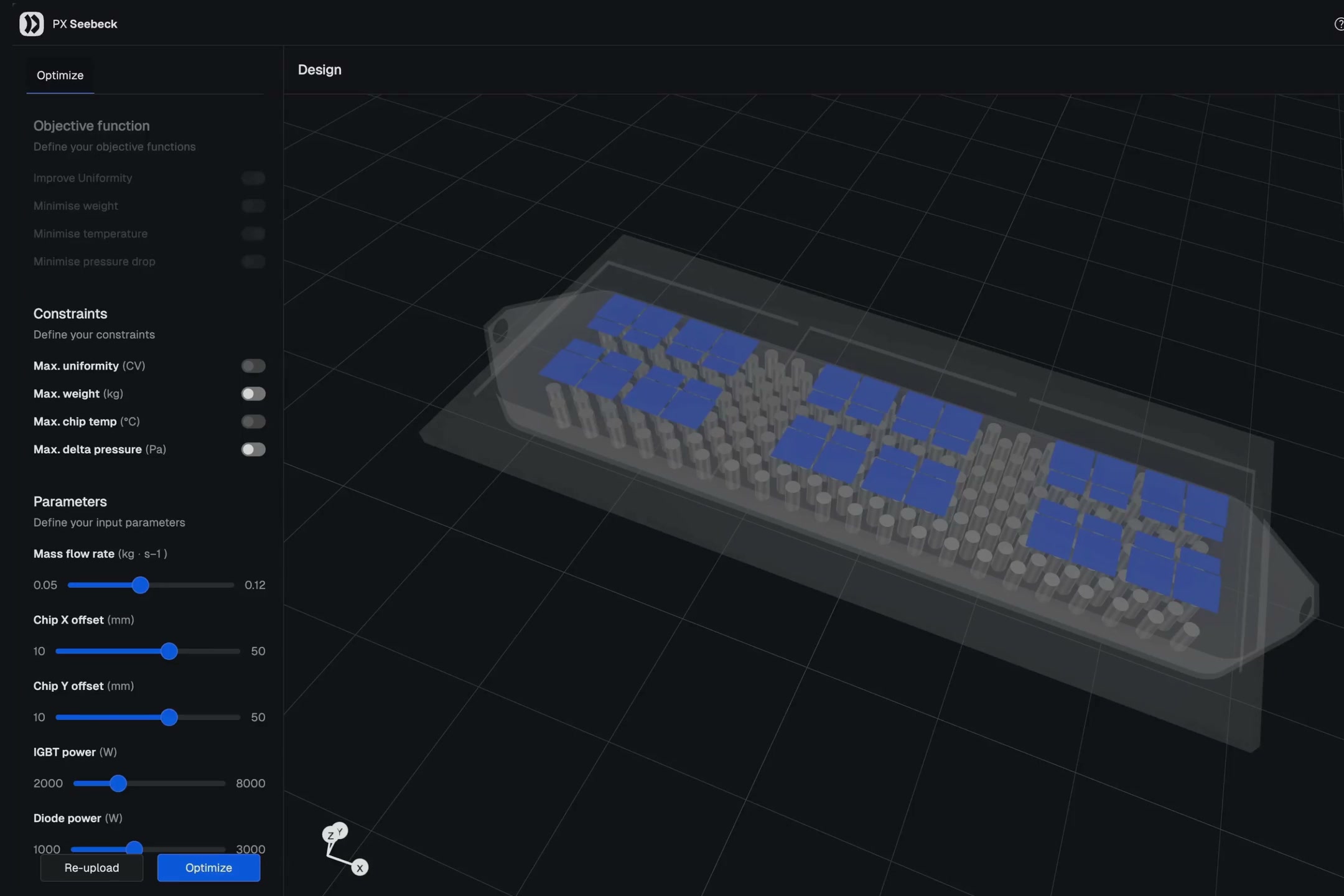
Design the cold plate with its pumpExperiments & R&D collaboration
Associate samples, experimental steps and versions. Retain the basis for every test.
Organize R&D records around samples, experimental steps and measurements. Team members can check form and parameter versions, review reasons for past changes, then decide whether to accept a result or request more experimental information.
Sample tracking, instrument data, experiment planning, versions and review
- What we need to start
- Sample and field definitions, experimental steps, instrument data formats, role and permission requirements, existing forms, and review and revision rules.
- How software contributes
- Build collection, validation, role-based review and controlled export workflows so data retains its context and version. Laboratory automation can begin with a specified instrument and one experimental workflow. Photonics tasks can focus on mapping design parameters to measurement records.
- Software outputs
- Records associating samples with experimental conditions, anomalies and revision history, review states, and exports that retain full field meanings.
- Professional judgement and revision
- Researchers handle missing data and anomalous variation; reviewers confirm revisions. Use these records to plan samples and conditions for the next experiment. Direct instrument execution requires confirmation of the actual hardware interface.
- How results are checked
- Use agreed test information to check anomalous-input rejection, role permissions, version revisions and export accuracy. Test instrument integration, scheduled execution and actual measurements separately; retain the conditions and records whenever a test fails.