Tasks, operations & human judgment
ENGINEERING / LOCAL RECORD
Engineering records & independent checks
- Inputs
- Fixed-version engineering information, parameters, signal contracts and local execution records.
- Software actions
- Generate parametric models, execute saved configurations and check geometry through an independent process.
- Outputs
- Models, execution records, check results and engineering questions still awaiting confirmation.
- Human judgment
- Review revision evidence and regression results. Validate equipment, materials and safety issues separately.
Review a control run
Software control configuration, input scenarios and execution records. Examine log replay, saved-configuration re-execution and regression checks separately.
Scenario results, signal differences and fault-revision records. Confirm software issues, then arrange vendor-platform or equipment tests.
Conditions needed to start
Clarify the conditions first.
01
Engineering objects & goals
The components, systems or operating conditions to address, the questions to answer and the evaluation criteria.
02
Engineering information & versions
Authorized drawings, component lists, CAD, parameters and control information, retaining sources and discrepancies.
03
Execution & checking environments
Existing control records, software versions and available tools. Vendor PLCs, equipment and measurement conditions are listed separately.
04
Engineering review & boundaries
Agree methods for independent geometry checks, software tests or equipment validation, and identify matters requiring specialist confirmation.
Which tasks software handles
Choose tools and workflows for the task.
Specific capabilities and operating environments are agreed at the start of each project.
Parametric models & component relationships
Fix the source version and retain mappings between parameters, models and components. Engineers can revise designs, inspect the effects of changes, and address dimensional discrepancies between sources that still require confirmation.
Control scenarios & execution records
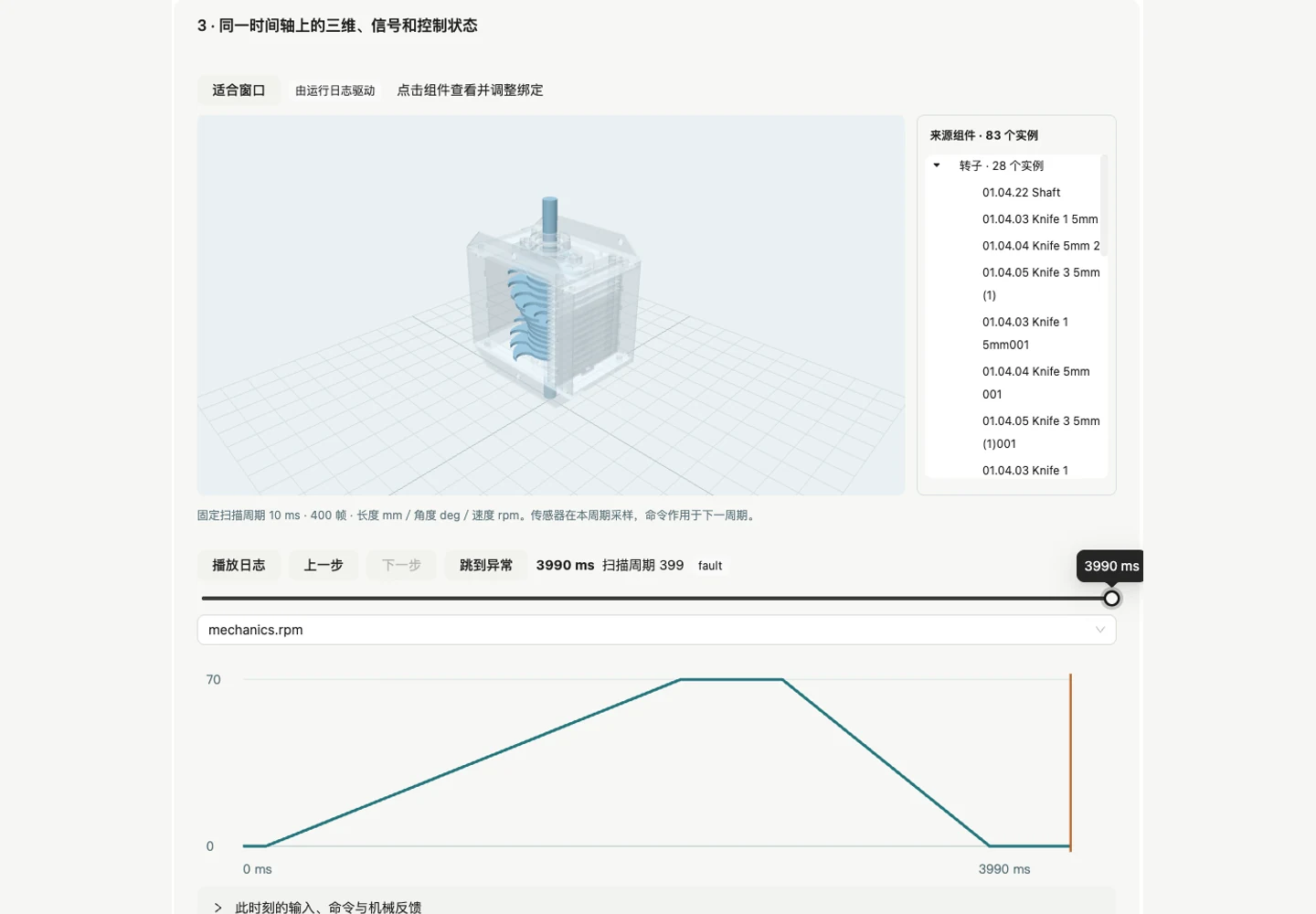
Place inputs, control states and anomalies within the operating sequence. Log replay examines existing records; re-executing a saved configuration checks the current software run. They are presented separately.
Geometry checks & fault regression
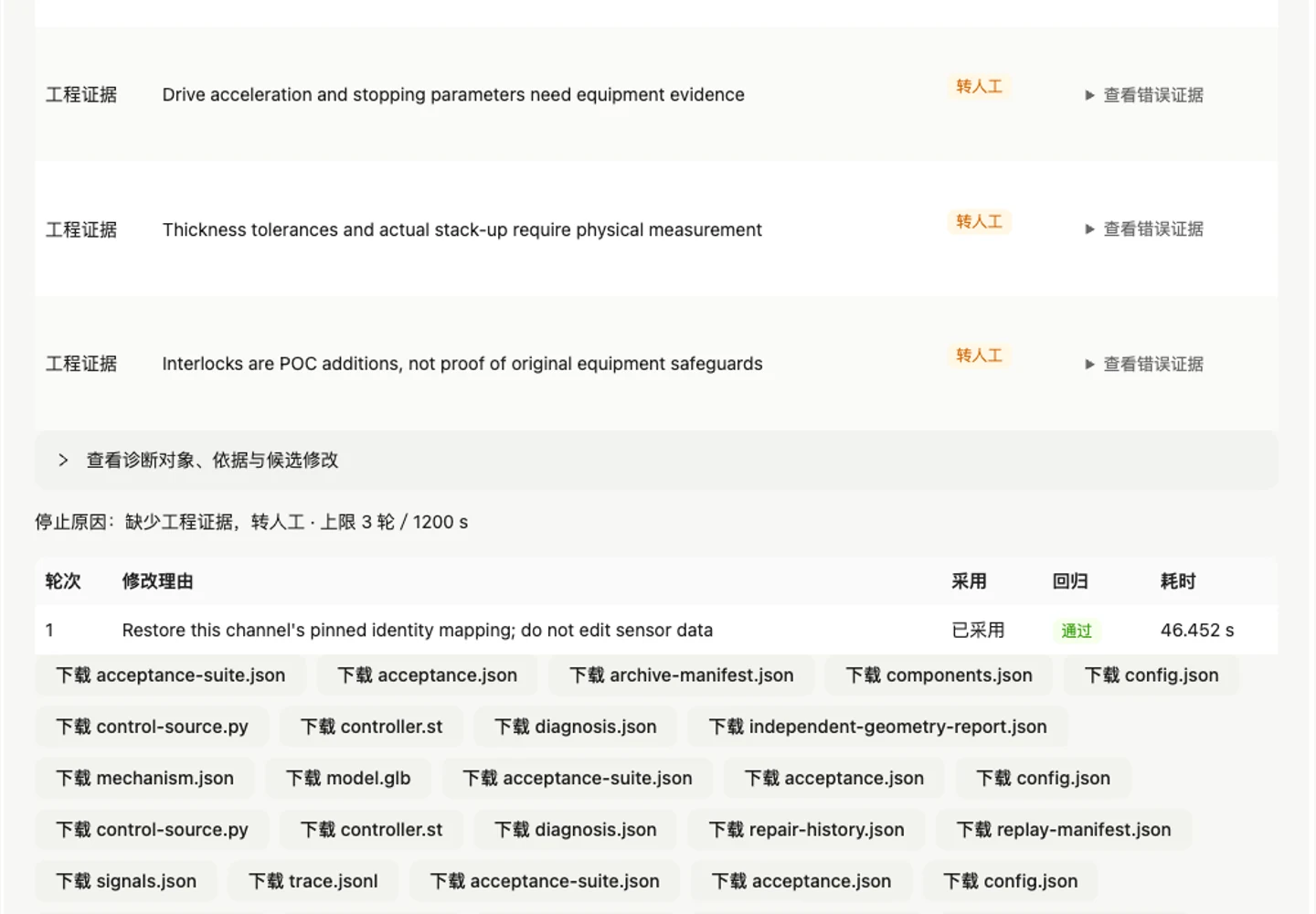
Independently check model solids, clearances and component relationships, retaining signal or sequence faults. Limit revisions to changes supported by evidence, then rebuild and rerun affected checks.
Current project evidence
See what has been built.
MOTRA provides local engineering validation within a defined scope: parametric models, software control records, log replay, saved-configuration re-execution and independent geometry checks. Dimensional and component discrepancies in the public information still require engineering confirmation.
Delivery & acceptance
Information & parameter mappings
Relationships between objects, components, inputs and source versions.
Editable models & execution workflows
Models, control configurations or a dedicated workbench within the agreed scope.
Checks & open questions
Independent checks, fresh execution and regression records, retaining unresolved engineering issues.
Versions & rerun instructions
Operating conditions, output versions, revision scope and environments needed for the next stage.
How results are checked
Check model solids, component relationships, software scenarios and saved-configuration re-execution separately. Equipment, real materials, vendor platforms and safety circuits require their own evidence and are arranged separately for each task.
Professional responsibilities
We build workflows to organize, execute and check models and control records. Engineers confirm dimensions, manufacturing constraints and component choices. Appropriate specialist tests separately validate vendor platforms, physical equipment, materials and safety requirements.
Validation scope & next-step conditions
Current public practice is local engineering validation within a defined scope. Software log replay, open control simulation and geometry checks do not establish vendor PLC integration, physical-machine testing, real-material calibration, industrial production readiness or safety certification.