The task and its users
PackProof organises products, packaging designs, components, suppliers and attachments into an information workflow. Organisers create packaging records, suppliers provide requested information, reviewers decide what to accept, and the team selects the version to publish.
Each person has a different task: organisers identify missing items, suppliers need to know what to provide, reviewers inspect submissions, and public readers need to know which version they are viewing. An attachment needs to be associated with a particular packaging component and supplier before follow-up and review can continue.
Why we designed it this way
After a supplier uploads a file, a reviewer still needs to decide whether it belongs to the current component and whether its contents can be accepted. Acceptance also leaves a separate decision about what should be public. Submission, acceptance into the reviewed record and publication are therefore separate actions; an upload does not directly change the public version.
A system that keeps only attachments and the latest status makes it difficult to explain the basis of a public version. Here, revision records are retained and internal information is separated from shared snapshots: internal work can continue while a public link still points to the selected version. This gives submissions, decisions and publication their own records. Any reduction in rework or handover time would require separate measurement.
What happens in practice
- Organise the packaging objects. Create packaging designs and components and associate existing attachments. Preview and confirm bulk information before import; missing measurements remain missing.
- Submit and review information. Suppliers provide information through links with a defined scope. Reviewers inspect submissions and decide whether to accept them; submission and review states remain separate.
- Publish the selected version. Select information for sharing and generate a stable link and QR code. Public readers see a snapshot while internal members continue managing revisions. Multi-company management and role scopes distinguish workspaces.
What can be checked now
The current stage is Live product. The public product page, supplier-collaboration demonstration and packaging-record demonstration show collection, follow-up submission and reading workflows.
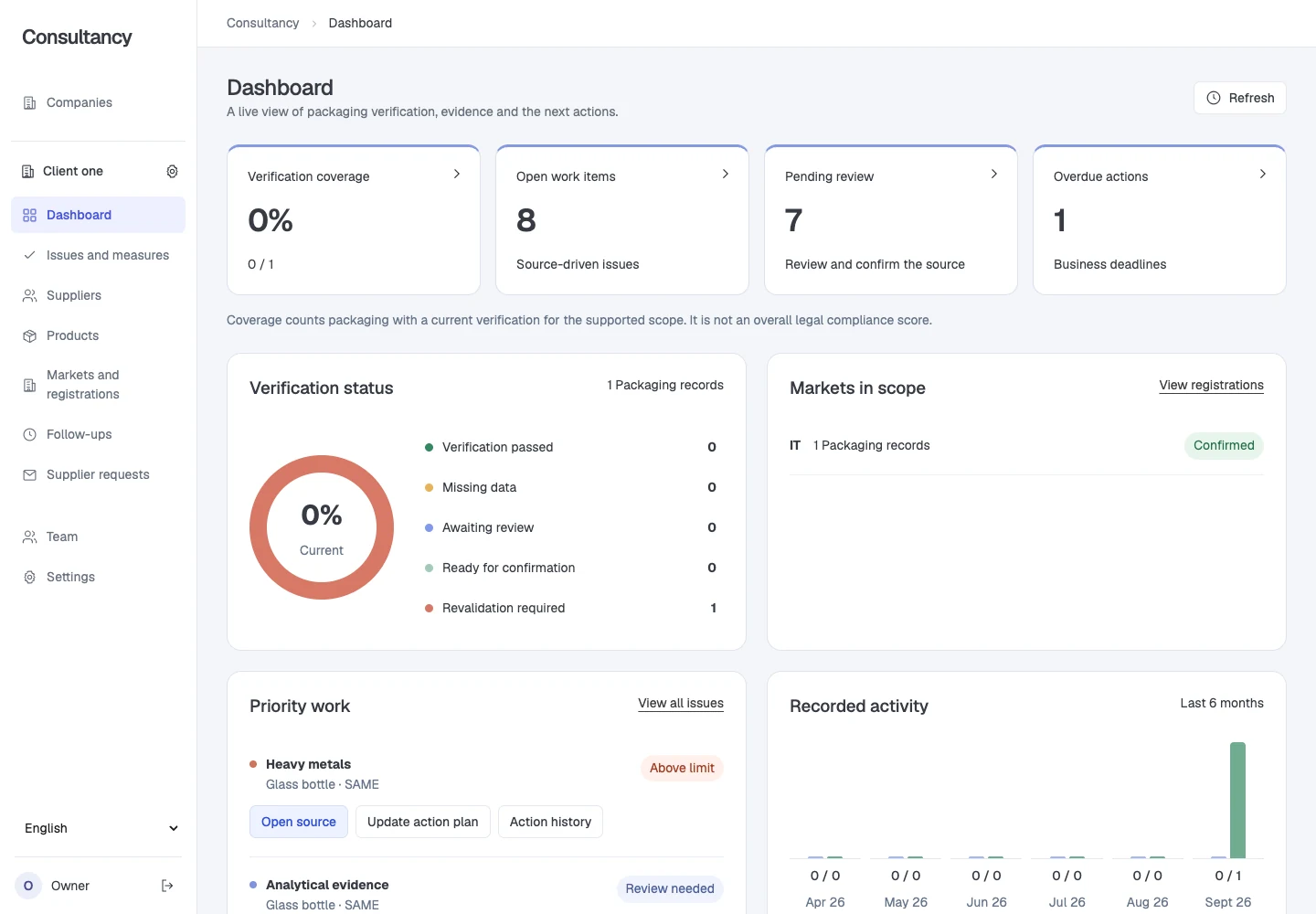
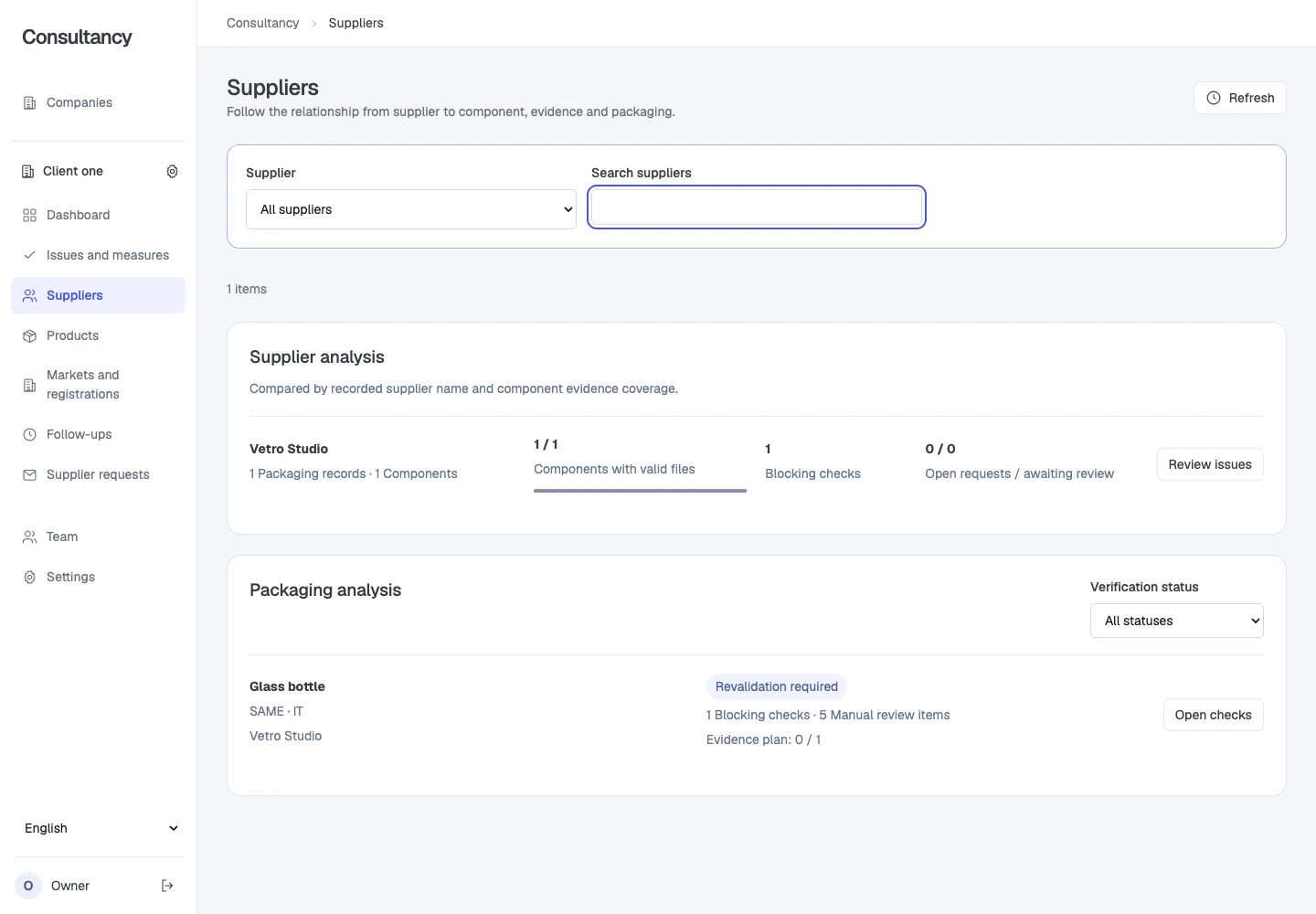
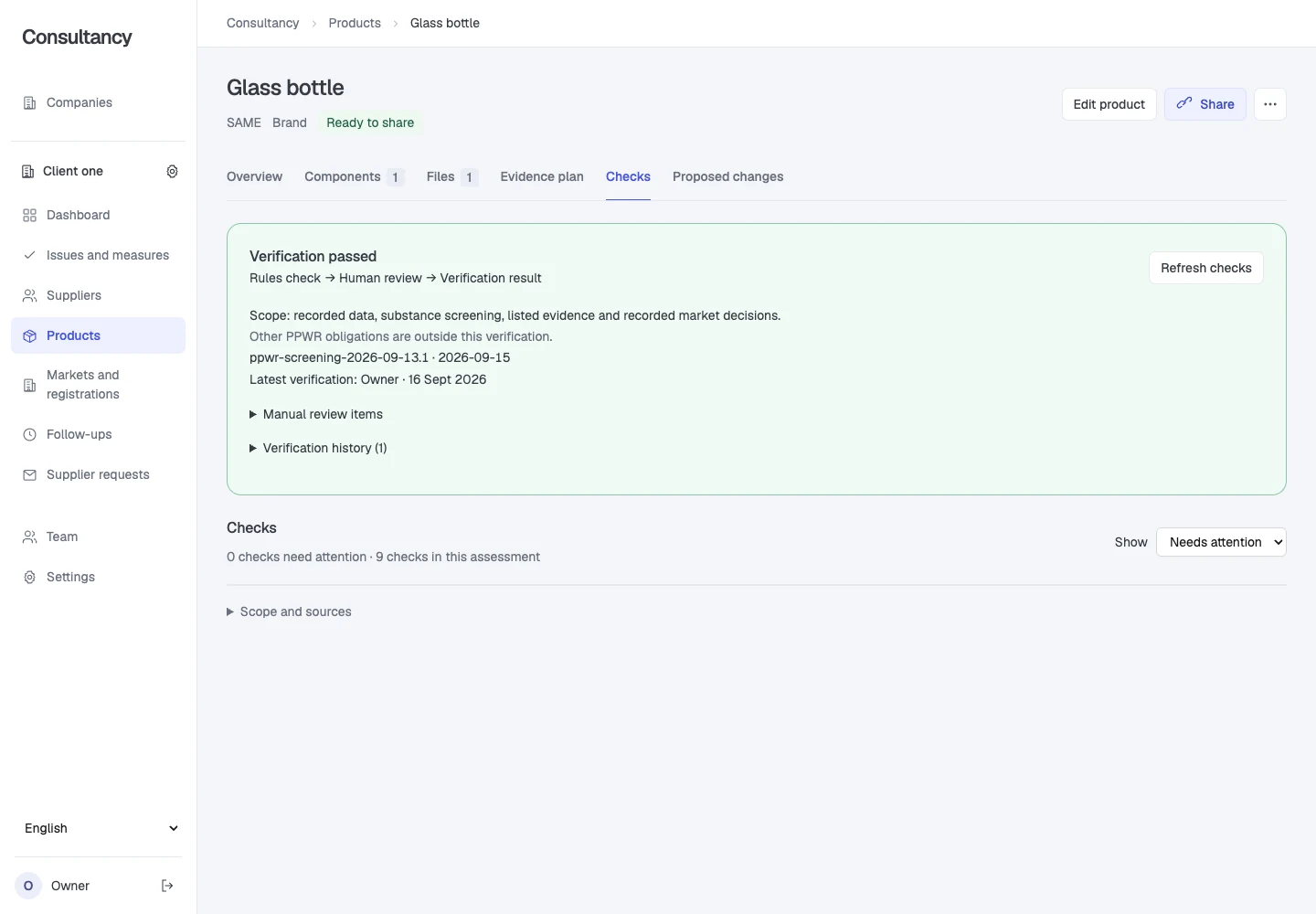
These screenshots come from existing development-acceptance archives of the actual product. They show a status and task overview, supplier-information associations and limited-scope review results. Client one / Vetro Studio and associated records are local, isolated test data; the current page layout may differ. They illustrate how information enters review and publication, but do not measure customer business outcomes.
Limits and next steps
Private workspaces are isolated by tenant, company and role; this case does not disclose their business information. Information completeness, workflow status and QR codes do not establish legal compliance. A pass shown on screen covers only the labelled checks. Regulatory applicability and product conclusions require professionals to review the actual business context.
A new collaboration task should first establish packaging and component scope, attachment sources, supplier responsibilities, review roles and publication rules. To assess usage outcomes, define measures and baseline data for missing information, rework or handover. No measured customer time savings or business returns have been published.