Tasks, operations & human judgment
Collect and revise a research form
- Inputs
- A fixed form version, field definitions and synthetic example data.
- Software actions
- Enter records while retaining field status, revision reasons and versions.
- Outputs
- Forms and revision records within their study and visit context.
- Human judgment
- Researchers check meanings, add missing information or explain why a field is not applicable.
Resolve review issues and export
- Inputs
- Records awaiting review, issue labels and role scope.
- Software actions
- Resolve issues according to roles and export within the agreed scope.
- Outputs
- Review status and data that preserve field meanings.
- Human judgment
- Specialists check issue resolution, dates and form versions.
Conditions needed to start
Clarify the conditions first.
01
Purpose & participating roles
The research or collaboration task to support, each role's permitted actions and review responsibilities.
02
Fields & form information
Authorized form definitions, field meanings, version rules and example data. Use de-identified or synthetic information during discussions.
03
Access & data conditions
Authorization to use information, data scope, existing systems and export requirements. Sensitive information is handled through methods agreed by both parties.
04
Checking rules
Methods for checking field meanings, revision records, permission boundaries and export results.
Which tasks software handles
Choose tools and workflows for the task.
Specific capabilities and operating environments are agreed at the start of each project.
Research data collection
Organize entry around studies, sites, visits and fixed form versions, preserving distinctions between missing, not applicable and zero values.
Role-based review
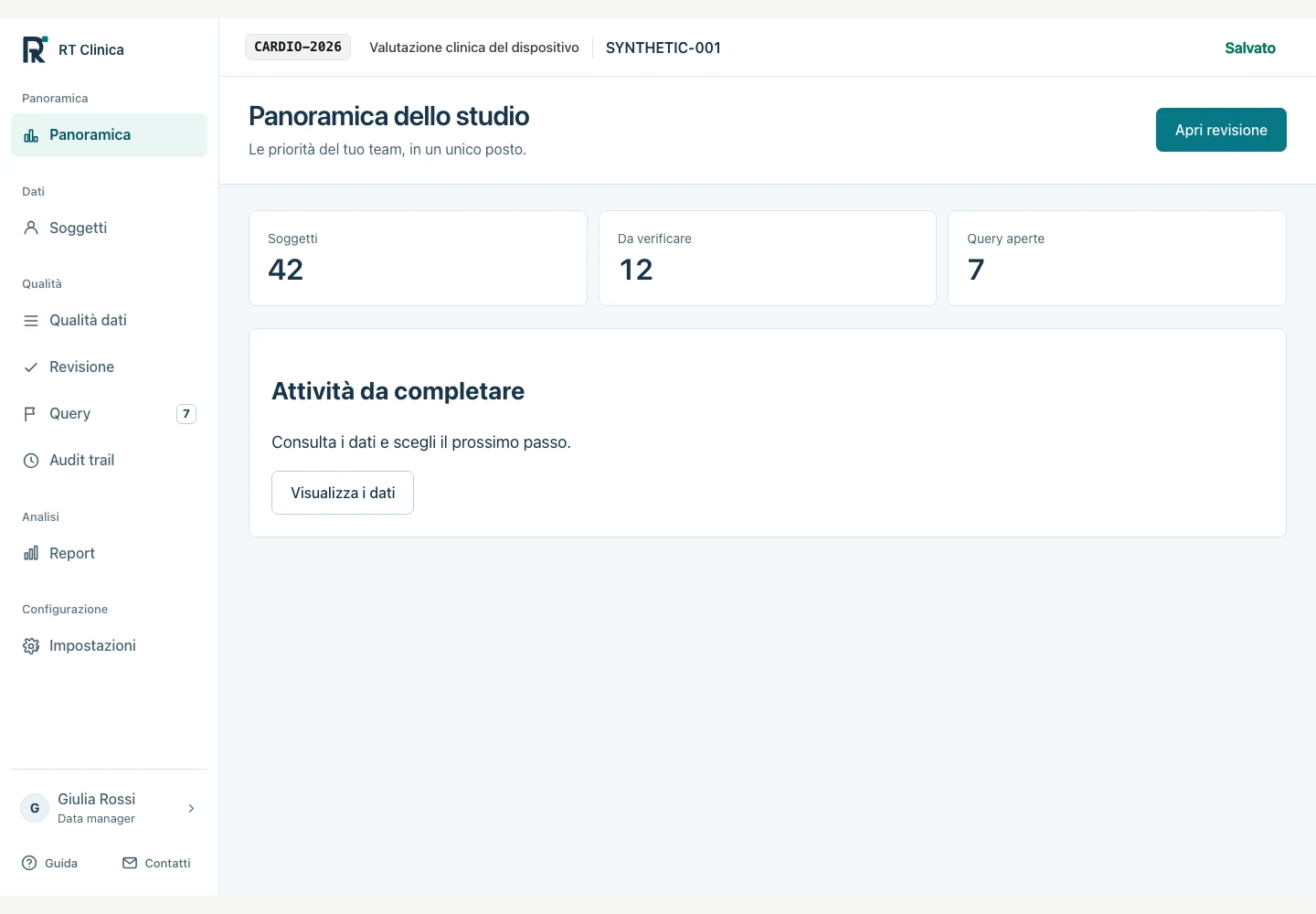
Show records, issues and revision reasons within the agreed scope, allowing reviewers to move from a summary to individual fields.
Controlled exports & versions
Export according to permissions, retaining original issue labels, actual visit dates and form versions. Isolated tests check access and export meanings.
Current project evidence
See what has been built.
RT Clinica is live. Its public case documents research data collection, role-based review, form versions and controlled export. Case summaries, medical Q&A or other AI-assisted functions require separate development and validation for specific tasks.
Delivery & acceptance
Task & data boundaries
The task, participating roles, authorization conditions and information scope.
Collection & review workflows
Agreed fields, forms and operating workflows, with example data.
Role & export design
Access rules for each role, revision records and export meanings.
Software checks & handover documentation
Isolated test records, known limitations and usage instructions.
How results are checked
Use isolated environments and de-identified or synthetic data to check collection, review, versions, exports and rejection of unauthorized actions. Software acceptance is handled separately from clinical effectiveness, qualifications or certification.
Professional responsibilities
We build collection, role-based actions and export workflows. The research team is responsible for field definitions, revision reasons and specialist review. Software checks do not replace clinical judgment, clinical effectiveness evaluation or certification.
Validation scope & next-step conditions
For clinical research and professional collaboration; no online diagnosis or treatment advice is provided. Applications involving clinical judgment require corresponding clinical validation, specialist review and applicable approvals. Do not submit patient information through this site.